Showing posts with label Red. Show all posts

LA CREMA 2012 “SHELL RIDGE” PINOT NOIR


“Perfection is not attainable, but if we chase perfection we can catch excellence.”…  Vince Lombardi

Finally, in the closing act of my one-life play, I acquire patience.  The rush to reach the next unnecessary chore is no longer a self-deemed necessity and the moment is now appreciably extended. Meals are the anthesis of fast food and wine gets aged. Bottles today that were tasted years ago at vineyards and wineries, are now emptied into the wine glass with full bodied flash backs of those wondrous excursions.  People met. Things learned.

Learned, among other things, that assumptions are dangerous.  You’ll find La Crema not at just your wine retailer but at the small local grocer too.  For the winery, it pays the bills as does the $4-liter bottle of wine at the large liquor store.  I’m not suggesting that what La Crema produces is in that group. I’m suggesting (trying to) that if you fixate an impression of the winery based on what you find at “Happy’s Grocery”, you may be doing yourself an injustice.

Recently, I opened a bottle of La Crema’s “Shell Ridge” 2012 Pinot Noir.  La Crema was founded in 1979.  In 1993, Jess Jackson bought the winery. As with many acquisitions (and there are SO many), these mostly get transacted “under the radar”.  In most cases, people employed remain employed in the same position. Change is/can be disconcerting in the marketplace, but usually what happens is that money simply flows in to build the brand. The label remains and not a lot is said about it.  In La Crema’s acquisition, the quality of wines was enhanced with winemaker Dan Goldfield. And La Crema became one of the top producers in California for Burgundian varieties (Pinot Noir and Chardonnay). 

From California’s Russian River AVA, La Crema continued expanding and in 2012 acquired prime lots in Oregon’s Willamette Valley.  Single vineyard and curve wines made from selected lots expressing terroir and balanced in a Wallenda-like fashion.  But this is “Shell Ridge”: Sonoma, from the Annapolis area of the extreme and rugged coast: steeply sloped, mountainside, and just one ridge from the Pacific Ocean.  To this day, vineyard crews still find ancient sea shells in the soil.

The 2012 vintage was comprised from select blocks of the 150-acre vineyard and focused on four clones: Pommard 777 (my favorite), 667 and 115.   I remember tasting a Cabernet Sauvignon from a well-respected maker in Chile.  Comprised of grapes from six plots (one a Cabernet Franc), I remember tasting the wine from each block separately. I remember liking most and (frankly) thinking another was terrible. I remember the winemaker then blending those individual wines into what would then be labeled under the finished brand and being blown away by the excellence, if not the perfection, of that wine.
 
And so it is with “Shell Ridge.”  I made some (thick-cut, bone-in) pork chops with a reduction of organic cherries with some diced onion, garlic and balsamic vinegar.  The chops had been brined and left to tender overnight.  Otherwise, things were simple: some pickled organic asparagus flavored with tarragon and shallot and a light salad of mixed spring greens and herbs drizzled with an apple-maple vinaigrette.  For me, if it’s pork it’s pinot.  O.K., some exceptions noted, but generally the pork/pinot pairing works for me.  What I wasn’t prepared for is how well this already magnificent bottle developed in just 6 years post vintage.

Just a few years ago, I would state that there was one, maybe two vineyards in California whose Pinot Noir could usurp the prejudice of my preferences as a Francophile.  Now it’s three.  I’ve had others of La Crema since (both single vineyard and not) and have consistently been impressed.

Akin to the “old world” style, but not ignoring the best of “new world” potential, La Crema (as a non-grocery option) subdues its fruit, restraining it from being adolescent and in your face. The mushroom and barrel of the “old world” is not there. But the juice is graceful and finessed. In this bottle, expect both red and sweet dark cherry but enveloped in layers of sandalwood.  In fact, that’s what I liked most about it. The wine (though I dislike the term) is feminine, it’s nose tempting; its mouthfeel: luscious. It is both sophisticated and classy.  Simply, a lovely wine of exquisite balance that seduces all the senses.  It’s nose is romance and its taste delivers on the  hinted experience.

All of La Crema’s vineyards are harvested by hand.  And, with wines being made respecting its source, their Pinot Noirs are pure and reflective of origin.  I’ve enjoyed several labels. With “Shell Ridge” being the most recent, this wine was not only an exceptional experience but an example in a list of many that excel in personality.  Same grape. Same winery. Different character.


In "Shell Ridge", expect soft mellow tannins (it’s Pinot Noir).  Expect cherry (both red and dark sweet) on the palate in a luscious mouthfeel of silkiness enhanced with exotic spice. Sandalwood.   Layers of sandalwood going deeper and developing. Anise. Blackberry then reintroduces the fruit. Medium bodied but palate coating lusciousness, this is romance in the glass.  Other tasters refer specifically to boysenberry, rose petal (I get some of that), dark chocolate and espresso bean.

There is no wrong impression. Each palate is personal and correct for the person owning it.  But in tasting this with others, all the participating palates were joyful.  Some noted Cedar (not Sandalwood), and pomegranate, orange zest, plum and black licorice with green tea. Maybe perfection is not possible. Each moment has its influences: the meal, the company, the mood and so many other things that affect our judgement (which alone is subjective anyway).  But this wine was as close to perfection as I could imagine a wine could be.

Cheeers!
………………. Jim

Like Wine Mizer on Facebook for mini-reviews, humor, suggested food & wine pairings, industry news and more.  In fact, since my last post here on May 18, I have placed 43 postings on Facebook.  Not better, just different. Don’t miss out.

TECH SPECS AND OTHER INFO;
Composition:               100% Pinot Noir
Oak:                             100% French (39% New of Medium and Med Plus Toast).
Aging:                          9 Months in Barrel
ALC:                             14.5%
TA:                               .54g/100 ml
pH:                               3.51
R.S.                              .05

After de-stemming, 70% of whole berries are left in tank. Must is left to rest for a 5-day cold soak at 48F. Fermentation is in open top tanks. Cap is punched down 3 times daily.

ARP:                         N/A  Vintage No Longer Available.  Was Between $45-$60.   Look For Current Vintages.  Recommend 2013, 2014 and (especially) 2015

La Crema Winery
Tasting Room:
235 Healdsburg Ave.
Healdsburg, CA 95448

Note:  Your merchant may (or may not) carry these better labels and may (or may not) be able to order you a sample bottle.  I’ve always been a big fan of taking a “winecation” and visiting the vineyards and wineries. But you can also “travel” without leaving home by visiting the winery’s website.  Not the sam experience., but it will be the same wine.


SANTA CRISTINA TOSCANA 2015


“Battles, unlike bargains, are rarely discussed in society.”….. James Fenimore Cooper

How times have changed since I first read The Last of the Mohicans in high school.  Today, it seems everything is fit for discussion or even viewing on the airwaves.  But on the plus side, given this lack of reservation today, it’s OK now for me to review this wine with an ARP of just $11. I can be a certified “snob” and a Mizer at the same time!  That’s a good thing because the story of this wine is an interesting one.

It begins in 1946 when Santa Cristina was introduced as a Chianti Classico by Niccolo Antinori.  Instrumental in the renaissance of Chianti, the Antinori family was involved in the famous Sangiovese, Cabernet Sauvignon and Cabernet Franc blend (“Tignanello”) that was influential in the “Super Tuscan” movement and “Solaia”, also from the Tignanello Estate.

Santa Cristina is a blend of Sangiovese (60%), with the remaining 40% coming from Cabernet Sauvignon, Merlot and Syrah and was never meant to be the others.    In 1987, with the passage of the DOCG laws (surprisingly spearheaded by Niccolo’s son, Piero), lower yields were mandated for classified vineyards. Among other things, more aging would also be necessary and doing this would alter the style and character of Cristina.

Interesting because one of the first things that struck me upon tasting this wine was its “new world” character.  Its taste is a tad sweet - attributable to rich, ripe, juicy fruit.  The nose is of mashed berry preserves. On the palate, the wine coats; thick, rich and juicy with ultra-ripe berry. A hint of cherry cola and a whispered hint of cardamom-like spice.


With the 1987 vintage, Santa Cristina moved away from the Chianti Classico designation and began adding Merlot in 1994 (10%) to the blend to make it softer and add more nuances of fruit.  The wine now is classified IGT (as were Super Tuscans anyway). While some may lament this “declassification”, I’ll opine that Niccolo Antinori knew where he wanted to go with this wine and arrived successfully where he intended.

That doesn’t mean I don’t enjoy Chianti Classico or even the Chianti from the DOCG’s 6 other sub-zones.  It doesn’t mean I don’t enjoy the dry and tannic Nebbiolo of Barolo. It does mean that there is room for all styles.  And, as I write this, I’m thinking of people whose only experience with Italian wine (other than Prosecco) has been with one of the Nebbiolo grape, maybe a Gattinara, and assumed that was representational of Italian wine.  Or maybe they found Chianti too acidic.

Italy is the land of over 900 grapes, but that doesn’t even matter in this example because – other than Sangiovese which is so widely accepted it might as well be an “international variety – the rest of the grapes are!  For those people wanting to branch out and taste the wines of the “old world,” this is your introduction.  For “old world” wine aficionados that want a “daily red’ and are in the mood to lighten the load on their palate, this is your wine also. 

With an ARP of $11 U.S., this wine is Antinori’s best value Tuscan red. I found it at $8.99 making it taste even better.  Grapes are grown on their estate hillside vineyards in Cortona, near Montalcino. Varieties are picked at different times favoring each variety’s most opportune time, then   de-stemmed and soft pressed. The must is fermented on the skins for one week (may vary) in stainless, then racked before undergoing malolactic fermentation. The result, after blending, is a “user friendly,” easy drinking red wine with red fruit and very gentle tannins. Other tasters note hints of black pepper, eucalyptus, blackberry, mint and cranberry. A wine for all seasons most definitely suitable for discussion in society.

Salute!
………….. Jim

Follow Wine Mizer on Facebook for mini-reviews, industry news and happenings.

ETCETERA
Santa Cristina:             https://www.santacristina.wine/en/
ALC:                             13%
Imported By:               Ste Michelle Wine Estates
                                    Woodinville, WA

BORDEAUX 2015 VINTAGE

“We are born at a given moment, in a given place and, like vintage years of wine, we have the qualities of the year and of the season of which we are born”…..   Carl Jung


If you regularly buy or enjoy Chateau Petrus, Margaux or Lafite-Rothschild for daily enjoyment, odds are you’re not following Wine Mizer anyway. But if you enjoy Bordeaux wine – or want to try some and are more like the average consumer - today’s post is for you.  At the Union des Grands Crus de Bordeaux tasting in Chicago on January 23, I relished tasting the white, red and sweet wines from the 2015 vintage. These were actually barrel samplings that were bottled for the trade show. I still have a few 2005, 2009 and 2010 aging and am always impressed with how they have developed over the years. Even the 2004 that I bought as “futures” redeemed itself with time in the bottle.
  
What particularly struck me about the 2015 vintage is how drinkable the wines are now. Sample after sample, right bank (Merlot dominated) or left (Cab dominated), fruit dominated both the tannins and acidity. If you don’t have a cellar or the interest to age wines, this is important. Even better, I think 2015 will be regarded as the best vintage since 2009-2010 so it should be regarded as an opportunity to either stock up on the vintage or to try tasting Bordeaux wine and learning why it is considered the benchmark of blends. Wine Spectator in their June issue
ranked the left bank 2015 vintage 92-95 points; the right bank 94-97 and Barsac &

Sauternes 94-97. Finishing with the sweet, botrytized whites of Barsac & Sauternes

at the tasting, what so often appeared – almost s a theme throughout the region - was

a freshness in the wine’s finish and mouthfeel: light notes lifting the mouthfeel of a

necessarily rich wine and displaying classical French finesse. 

Despite the somewhat fruit forward nature of this vintage, the reds have more structure than 2007 and should cellar well, giving the vintage a benefit to both the experienced appreciator of Bordeaux wines and those newly introduced.   

A Votre Sante!
....................... Jim

** Follow Wine Mizer on Facebook for frequent posts, mini-reviews of wine, food & wine pairing suggestions, industry news and just lots of good things.


H. COTURRI & SONS WINERY 2016 YOUNG CARIGNAN

“Our jobs as marketers are to understand how the customer wants to buy and help them do so.” – Bryan Eisenberg

I’M NOT A FAN OF THE LABEL.  The style is intended to grab your attention.  But it too will soon get lost among the growing number of labels with paintings of distorted faces on wine bottles.  Then perhaps L.E.D. type sparklers will be attached to wine bottles. Sensitivity pads in the floor of the retail store can remotely set them ablaze as you walk by.  And like some greeting cards, songs can be played from each bottle as you open it.  Eventually, labeling will again welcome useful information and an identity. But in the meantime, you’ll need to often look to the back label if you want to know what’s inside the bottle and who made the wine. 

This 2016 “Young Carignan” from Coturri Winery is a case in point. Grapes are from Mendocino County.  The winery is in Glen Ellen (Sonoma County).  The wine is not fined or filtered and is organic.  The alcohol is 14.2%.  It is intended to be consumed young and that is why (they say) the bottle is intentionally clear (though when filled with the dark purple juice, you likely wouldn’t notice that).  All that is on the back label.  But had some useful information (Winery, Varietal, AVA and Vintage) been on the front label, other information could have been on the back that is important to a passionate segment of the market. 

For example, the vineyard is CERTIFIED organic.  The Coturri winery has never used grapes treated with pesticides, fungicides or herbicides. This is not something new for them (they’ve been doing it this way since 1961). It is also dry farmed with the initial rootstock never irrigated.  Grapes are harvested by hand. The wine has no added sulphites and only indigenous yeasts are used.  In short, this is natural wine.  And while that’s appealing today to a segment of the market, it’s just the way Coturri has always been making wine.  For that niche of wine consumers, or that segment having read about “natural wine” and wanting to try it, I suggest Coturri and others consider appealing to their “natural” market instead of imitating the graphic art front label concept used by bigger players with bigger budgets.  It would seem a better use of limited label space; certainly more efficient than the consequence of not promoting it to that group of consumers who specifically shop for these wines.

Besides, Coturri doesn’t just produce Young Carignan.  The winery also produces and bottles Pinot Noir, a Rose, Syrah, Zinfandel and others.   Each varietal opens an opportunity to a market segment. So the young man wearing a belt made from hemp fiber but who doesn’t like Carignan and likes instead …….. well, you get the idea.

So, after this, what’s my impression of natural wine – or at least this one?  Key to an understanding is that all wine will have sulphites.  That’s natural too.  But natural wine will not have any added sulphites.  And while there’s another segment of the wine market that has bought into sulphites being the worst of evils, understand that sulphites are also a preservative against bacteria and microbial infection.  Yes, wine has been made for thousands of years without adding sulphites.  But, as a rule, I would suggest that all natural wines be consumed young.  People have been getting sick for thousands of years too.

That said, this “Young Carignane” is 91% Carignane, 5% Syrah and 4% Zinfandel.  All these black grapes make for serious red wine, with Carignan noted for being high in acid, tannin and bitterness while also being rife with problems on the vine like powdery and downy mildew.  It’s also prone to rot and infestation by grape worms and seems a varietal that was blessed by the agrochemical industry.  Yet, when handled correctly (meaning just right) Carignan has its charm.  Coturri uses only two and three year old barrels and bottles their “Young Carignan” just three months after fermentation.  Picking fruit at exactly the correct moment is critical and Coturri, which dry farms and head prunes their vines, seems to know when that moment arrives.

In the glass, this wine shows as dark purple. Initially, it displays

a rustic edge showing acidity and tannic structure.  Aired, however, it softens and opens with blackberry, licorice and cassis on the nose with a note of forest floor.  It has a creamy, velvet-like texture with black and blueberry on the palate.  Tannin, though controlled, is evidenced by a slight drying sensation behind the upper row of your teeth.  Vacuum pumped, capped and saved for the next day, the “forest floor” becomes more like fresh white mushroom and the nose takes on aroma of brandied berry fruit.  Texture is syrupy rich with blackberry and some heat remains on the finish.


Carignan was once so widely planted in Languedoc-Roussillon that it was France’s most widely planted (red wine) grape for much of the last century.  As Syrah is different than Shiraz and Bordeaux Blends are different too than Meritage produced in the U.S., and a Cahors (Malbec) is different than Malbec from Argentina, so too is  this “Young Carignan” from Coturri & Sons (despite that in the U.S. we have adopted the more common spelling of Carignane).  I won’t even get into Pinot Grigio and Pinot Gris.  But I will get into this bottle offering charm and value, particularly if you have not enjoyed this grape or it being presented in this style. 

Consider pairing this with marinated venison or stew, a rack of lamb with baby eggplant and onion in roasted tomatoes, duck or goose with a sausage stuffing or beef brisket.

Cheers!
………Jim
** Follow Wine Mizer on Facebook for mini-reviews, food pairing suggestions and occasional humor.


RAATS CABERNET FRANC 2011

If you want to start an argument in the wine world – and believe me, it’s not hard to do – all you have to do is mention the word terroir.”  …. Eric Asimov

And so we continue with the issue of terroir.

I was enjoying a glass of Cabernet Franc when my imaginary friend stopped by.  Polite as I raised to be, I asked if he would like to have one too. He declined, saying Cabernet Franc was not his wine of choice. Too soft, too light, too thin he said. He preferred a wine of more structure and with more grip, like Cabernet Sauvignon. I found that interesting, because it was Cabernet Franc (along with Sauvignon Blanc) that gave birth to Cabernet Sauvignon, but never mind.  I didn’t mention it. I poured him a glass of wine away from the table and asked him to taste it. I didn’t disclose it was Cabernet Franc. 100% unblended, pure Cabernet Franc. Dark and foreboding in the glass.  Serious stuff. I’m not being facetious.  This wine is dense, silky, rich and deep.  But I had promises to keep.  I needed to finish this exercise in terroir.  If ever, there was a good opportunity to do so, this Cabernet Franc from Raats Family Vineyards would allow me to do so.

Raats Family Vineyards are in the Stellenbosch District, south-western South Africa, about 25 miles east of Cape Town.   The Atlantic Ocean is west, Walker Bay south. Although soil types vary within the district, and the district is divided into sub-regions (called wards), the overall climate is Mediterranean. Summers can be hot with abundant sunshine. Generalizations, however, are dangerous. Many producers vinify fruit from vineyards throughout the area. Further north, summers are just slightly warmer than Bordeaux. Prominent mountain ranges run throughout Stellenbosch, offering` a range of altitudes, aspects and soil. The mountains also help channel wind through the vineyards providing respite from the morning’s hot sun.

That Stellenbosch produces Cabernet Sauvignon and Shiraz (Syrah) is an indication of the District’s overall warm conditions. That it also produces Chenin Blanc (called “Steen” locally) is an indication of the area’s diverse growing conditions.  But whether you compare the Chenin Blanc or the Cabernet Franc of South Africa to that of France’s Loire Valley, you’re certain to taste the difference.  Which style you prefer is not important (to me).  What is important is that you know of it and what contributes to each style’s uniqueness.

As with all wineries that come to mind, Raats offers several labels within the same varietal. Pictured here is their entry label (a 2011) retailing at $33.99. One sip and you know something different is going on in your glass. Viscous, dark fruit overlaid with a layer of dark chocolate. First impression: black cherry, lots of cassis, some dried herb.  This is somewhat like, more than a passing relationship to – Cabernet Sauvignon. Now you understand how Cabernet Franc was the parentage of Cabernet Sauvignon and where the latter inherited some of its characteristic from the former.   

All of Raats’ Cabernet Franc is grown within Stellenbosch, all of it upon the decomposed dolomite granite soil of mountain foothills.  Wine produced from these vines offer good acidity and minerality. The wine has body like a Cabernet Sauvignon and some grip, yet interestingly smooth tannins – a nice balancing act.  Black cherry and plum, a note of tobacco.  If this is Cabernet Franc (it is), it is unlike any other you have had (assuming you don’t regularly enjoy it already).  Whether this varietal grown under these conditions is better than, for example, the Cabernet Franc of California or Washington State or New York or France’s Loire Valley isn’t even the question. Tasting the differences is the answer.  The question is which style do you prefer?  However you answer, you’re right.

Gesondheid!
………………………. Jim

** You’re missing out if you haven’t yet liked Wine Mizer on facebook where I post almost every day. Mini-reviews of wine. Wine & food pairing suggestions, jokes, puzzles and more.

TECH SPECS FOR RAATS 2011 CABERNET FRANC

Varietal:                      Cabernet Franc 100%
Soil:                             Decomposed dolomite granite
Age of Vines:               18 – 25 years (as of 2011 Harvest)
                                    Trellised, No Irrigation
Ageing Potential:        7 – 10 Years with good conditions
Vineyard blocks are hand-picked. Hand sorted three times in the cellar, crushed and cold-soaked on the skins for 5 days, basket pressed and allowed malolactic fermentation in steel. Aged 18 months in (25% new, 25 second, 25 third and 25% fourth) French Vicard and Mercury oak barrels. Not fined and not filtered.
ALC:                             14%
Acidity:                         6.0 g/l
Ph (at Harvest)              3.45

RATINGS:                   92 Robert Parker
                                     90 Wine Spectator
                                     90 Wine Enthusiast               


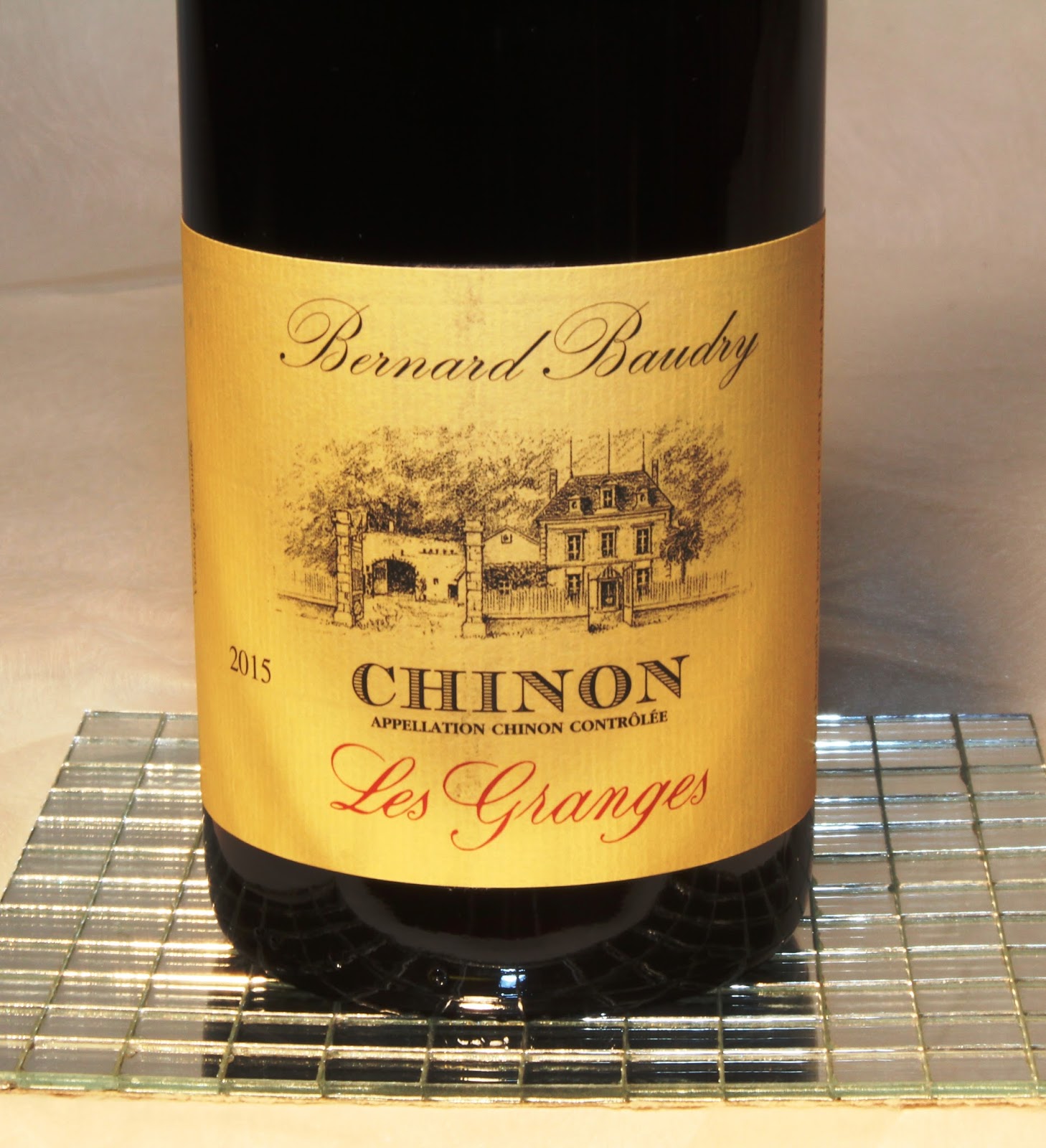
Bernard Baudry CHINON Les Granges 2015 Cabernet Franc

If you want to start an argument in the wine world – and believe me, it’s not hard to do – all you have to do is mention the word terroir.”  …. Eric Asimov

December 4 is Cabernet Franc Day.  I’m sure the fourth of December also marks occasions for myriad reasons to celebrate, purchase and make many enterprises more wealthy, but this being a wine blog, let’s just focus on Cabernet Franc today.  Let’s focus too on the reason for this blog: it is not necessarily to review my favorite wines or even favorite styles of wine. Sometimes that’s difficult for me to remember because we all have our preferences and, well… we tend to prefer what we prefer. But while my palate is trained, it is not universal.  You may find favor in wines I do not. So one way for me to respect that and still serve a purpose is to occasionally focus on terroir – the combined effects of climate, elevation, slope soil, exposure and other elements that make for a variety growing in one region resulting in different tasting wine of the same variety but grown in a different region.

In the U.S. where we label wines by their variety, that’s sometimes hard for some to appreciate.  But think of Cabernet Sauvignon grown in Napa vs. Sonoma Valley or Washington State. Cooler climate makes for wine less fruit forward. Taste (side-by-side) similarly priced Cabernet Sauvignon of the same vintage but from these different regions and you’ll be tasting terroir.

Cabernet Franc is not regarded as a “noble” variety (defined as being widely planted in most of the major wine producing regions).  But Cabernet Franc, along with Sauvignon Blanc, is parent to Cabernet Sauvignon, which is considered “noble” (as is parent Sauvignon Blanc). Somehow, Cabernet Franc got left out. But where would the blends of Bordeaux be without it? Bordeaux, of course, is in France where Cabernet Franc is grown significantly in the Medoc, Graves and St-Emilion.  But it’s in the Loire Valley that Cabernet Franc can attain the ethereal qualities many aficionados desire.  And because terroir is so important in France, it’s not just anywhere in the Loire Valley. Cabernet Franc from the Loire is known under the labels Chinon, Bourgueil and St.-Nicholas-de-Bourgueil. Each of these is a small appellation within the larger appellation of Touraine. And the Touraine is one of four sub-regions within the Loire Valley. Get the idea?  The French are serious about terroir.

Naming wine as they (the French) do by a sub-appellation wherein the grapes are grown is one reason many Americans don’t associate Cabernet Franc with, for example, Chinon. That’s too bad, because as I said, coming from the Loire Valley it is an area for that grape that many oenophiles consider the best sourcing of that variety. Chinon also is the most readily available of the three.  You might think also that involved with all that French fussiness, Chinon would be expensive. It’s not.  This Bernard Baudry (2015) has an ARP (w/o tax or shipping) of $15 U.S. 

But before I get into this particular Chinon (Cabernet Franc) let me mention just a little about the area. Touraine is about 125 miles (200 kilometers) east of the Atlantic Ocean; close enough to benefit somewhat from the moderating effects of the ocean and gain early warming spring temperatures and relief from summers of draught in the more continental climate to the east. But overall, the Loire exists on the lowest baseline of where such grapes can ripen.  More easily stated, it is a cool, northern climate. When the grapes get enough sunlight and warmth, wines produced are elegant in their finesse and subtlety.  In good years, wines of Chinon entice with raspberry, violet and briary spice, but in poor years they can be thin.  In good years, wines are fresh and crisp yet lightly layered in fruit; fragrant with light tannins and high acidity. Light, zesty and refreshing, they are appreciated precisely because they are not fleshy and full bodied.  But if the weather is too cool or rainy, grapes will not sufficiently ripen and the wine will be thin, even herbaceous and harsh. This can happen also if elevage (maturation, the time between fermentation and bottling is too short). But that is technique, not weather related.

Bernard Baudry is regarded world-wide for his wine making role in the Loire having rose to prominence making focused, textured Chinon. He started the winery in 1975 with just 2.5 hectares (6.18 acers). He developed this into a 25-hectare (61.8 acer) estate out of family parcels and purchased land. His son Matthieu, who has worked with him since 2000, is now the head winemaker. Matthiew had experience also in New Zealand and California. His style exemplifies fruit picked at perfect ripeness levels, vinfied using state of the art modern technology married to ancient tradition. Read that to mean modern, temperature controlled stainless steel tanks and cement tank aging.

The soil there is gravel and sandy. The wine is unblended, 100% Cabernet Franc. Vines, at 27 to 30 years old as of the 2015 vintage, are considered young. 
Vines are terraced along the riverbed benefiting from reflected sun and heat retained in the soil’s gravel. Baudry produces several labels of Chinon with “Les Granges” being the entry label. By intention, this is young, fresh wine, and I suppose you could accurately say it’s a “thirst quencher.” But using that term alone is insufficient.

This is a wine that rewards your attention to it and your effort to dissect its aromas of brandied tart cherry, violet and rose petal. In the glass: a mixture of tart cherry that develops smoky and dusty notes of violet, dark rose, earthy notes and dried herbs. This is “peoples’ wine,” but elevated tastefully to be a companion to roast chicken, charcuterie, grilled lamb, beef stew and simple foods and cheese.   

Domaine Baudry has operated organically for decades and since its inception has believed in minimal intervention both in the vineyard and the winery. In 2013, because of inquiries from consumers, the winery completed the process of becoming certified as organic. You may not be able to taste the difference in organic and non-organic wines, but this Master Gardner believes organic is a good choice when possible.  And he’s suggesting that, regardless of organic or not, you taste the terroirs of Cabernet Franc.  Join me on a short expedition that should resolve the argument Eric Asimov referred to. In a few days, I’ll post again about a Cabernet Franc from another country you may not associate with this varietal.  Different? You bet! Better? That’s for your palate to decide. And that’s the whole point of this exercise.

Sante!
……………….. Jim
** You’re missing out if you’re not following Wine Mizer on facebook, where I post almost every day. Mini-reviews of wine (much less blather). Food pairing suggestions. Industry news. Quizzes.  


BODEGA RUCA MALEN WINE OF ARGENTINA

“I like on the table, when we're speaking, the light of a bottle of intelligent wine.”   Pablo Neruda

Already here, leaves are beginning to turn color. In the vineyards, harvesting has been underway for some time. And soon enough, others of us will have restless sleep with nightmares of snow shovels and blowers. But south of the equator, thoughts are different. Those in the vineyard will have their sleep interrupted by thoughts of all the work ahead. Budburst (September-October), Shoot and leaf growth (September-March). Flowering and fruit set (November–December).  Veraison, when grapes begin to ripen (January-March). And finally, harvest (March-April). In the Southern Hemisphere, July and on is winter dormancy. 

So while September to October is our season of harvest in the Northern hemisphere, March to April is the harvest at 20-50 degrees latitude south.  As the day’s heat moderates here and cools into evening, I find myself enjoying more reds again.  And what better way to look ahead to spring than enjoying reds from south of the equator where spring is ripening now?

Malbec is my red of choice at these times.  Originally, from northern Burgundy and once a popular blending grape in Bordeaux (it became less so after the 1956 frost killed off 75% of the plantings), it is still popular in Cahors (SW France) where it is known as Auxerrois),  Requiring more sun and heat than either Cabernet Sauvignon or Merlot to physiologically ripen.  Malbec in northern France was not the best choice commercially.  Same cannot be said for Argentina, when cuttings from France were first brought there in the mid-19th century. In fact, ask most people today where Malbec is from and they’ll likely say Argentina. Certainly, it’s the most popular style. Just as Pinot Gris and Pinot Grigio are different wines from the same grape, Malbec from France and Argentina is different though same.
 
In fact, the grapes themselves in Argentina are different than their French relatives, having smaller berries and in tighter and smaller clusters. This suggest that the cuttings brought from France were of a clone that may have gone extinct in France due to frosts or even the phylloxera epidemic. French Malbec, particularly from Cahors will produce at its darkest color and tannic structure due to the high limestone content in the soil. Malbec from Argentina leans toward being plumier (from soil with more alluvial sand) and fruit forward and, generally, with a more silky texture.  Grown at high altitude in the foot of the Andes, vines receive sun, but the altitude insures large evening drops in temperature, delaying the ripening process. Grapes have the opportunity to develop ripe fruity characteristics but in balance with acidity - avoiding the soft drink character of otherwise fully sugared but under acidified fruit.  

Winemaker Pablo Cuneo (l) and Chef Lucas Bustos (r) of
Bodega Ruca Malen. As usual, the Mizer is in the middle of it.
Meeting with Pablo Cuneo (winemaker for Bodega Ruca Malen) in August at the “Rural Society of Chicago” restaurant, I and other reviewers tasted several of the estate’s wines, including an estate Ruca Malen Sparkling Brut, but I’m all about reds today (with one exception).  We began with the entry label Yauquen Malbec. Aged six months in 20% French oak (80% stainless) this is a young, fruity and fresh wine meant to be enjoyed every day. Bright clean notes of cherry, plum and violet with a whispered hint of vanilla. But with an ARP of about $14, I’m happy to invest an additional $4 and appreciate the Ruca Malbec Reserva (2014). Deeper, richer, this wine is everything that made Argentina synonymous with Malbec. Elegant and complex, with a plummy texture, it layers blackberry, plum, black cherry, licorice and notes of violet. This is a soft, but not flabby wine, less tannic than its French relatives, more fruity but balanced elegantly and with enough tannin in the finish to give it structure and ageability of seven years under good conditions.  12 months aging in oak (80% French, 20% American) add some caramel.

We moved on to Ruca Malen’s 2013 Petit Verdot Reserva. Grown in Agrelo within the Lujan de Cuyo region on rocky soil with deep silt and at altitude of 1000 meters (3281 feet) above sea level, this terroir is regarded as some of the best within all Mendoza. Juice is aged 12 months (80% French, 20% American) with malolactic being conducted in stainless after 28 days of maceration in stainless before going to wood. Petit Verdot, another French grape and another vulnerable to early frost, does beautifully under the Argentinian sun. Though traditionally a grape used in blending Bordeaux wine, this stand-alone varietal of Ruca Malen’s struck me as being Bordeaux like despite it being unblended. Iron, clove, allspice in the nose. Deep ruby red with aromas also of red fruit. Blackberry and plum in a rich and deep textured wine with earthy notes and spicy intrigue, this wine, at an ARP of $19, is a super value and begs to be paired with grilled steak, lamb and sausage.

We “finished” with a Ruca Malen 2011 Kinien de Don Raul, the only wine, at $75, anyone could consider being special occasion priced, at least before tasting it. A blend of 64% Malbec, 11% Cabernet Sauvignon, 15% Petit Verdot and 10% Syrah, it spends 18 months in 90% French oak (expensive) and 10% American. An example of the art and craft of master blending, it is made from selected grapes and as a very limited edition. The name “Kinien” is from the Mapuche language meaning “unique” and it truly is. Yes to all the cassis, plum, blackberry, sweet baking spices and notes of vanilla and caramel. Yes to the balance. But one taste of this wine alerts the senses with clove and white pepper that this dry wine which opens so majestically with air in the glass is something different.
 
As I said earlier, this is all about the reds, with one exception. Argentina is renowned for Torrontes and I’ve enjoyed supporting the economy of Argentina by consuming many bottles of this refreshing white wine. The best wines come from grapes grown at high elevation in the Salta region where Ruca Malen grows vines at an altitude of 1700 meters (5577 feet) above sea level. The origin of this grape is not yet fully understood, but it’s accepted that it originated from a cross of Muscat of Alexandria and Criolla Chica. Pablo referred to the Muscat while tasting, but he didn’t have to. My taste buds knew it already. With more body than most, this Torrontes was so easy drinking, it could be dangerous (14.1 Alc.).  Grapes are whole bunch pressed and never see wood.  The acidity is refreshing yet without bite. Jasmine, orange blossom and citrus dominate but in wondrous harmony. Fresh, soft and fruity with floral notes, this wine is romance and more graceful than most. At $13, this one is not to be missed.

During dinner, Pablo mentioned that his objective in making finished wines was to deliver a clear expression of the fruit with an intensity and sufficient acidity to make Ruca Malen wine that is meant to be enjoyed with food.  No question: every wine I tasted was food friendly. Tasting them, in fact, just brought to mind meals planned ahead that ccould show off the wines. Still, these wines, and with the Petit Verdot in particular, – rich and plump, yet fresh and with structure – are fulfilling enough to be enjoyed by themselves in the cool of a fall’s evening.  Old world grapes, made by a winemaker whose objective includes respecting the European tradition of making wines meant to be enjoyed with food, but with vines grown in the new world (albeit in unique and excellent terroir), Ruca Malen offers wine at prices that put the words quality to value in bold type.

Salud!
……………… Jim

Wine Mizer is not a “dba” because it does not do any business. Truth be told, it   is a not-for-profit non-corporation, money-losing sole-proprietorship venture.  Such assures you, however, that opinions are unbiased. Wine Mizer accepts no advertisements. Support this venture by “Liking” Wine Mizer on facebook.

Carob dough stuffed with Malbec
braised rabbit sith nut and potato emulsion paired
with Yaquen Malbec


Like Wine Mizer on facebook for mini wine reviews, industry news, fun facts, occasional puzzles, food and wine pairing suggestions and more.

Foie Gras Mousesse, Amarena
Cherry and Yaquen Torrontes


Cured olive oil marinated
Angus beef with a bean
sauce & Malbec sauce paired with Ruca
Malen Reserva Malbec 2014


The Rural Society of Chicago is attached to
Loews Madison Hotel Chicago and delights
with Argentinian cuisine. Chef Lucas Bustos
came in for the event from Bodega Ruca Malen
in Argentina and indeed delighted us all.
Grilled filet mignon with smoked
carrot puree, quinoa and sweet corn.
Paired with Kinien de Don Raul


Started with (I can't control the placement of this program)
with seasonal squash marinated in lemon chilis and fresh
herbs. Paired with Yauqun Torrontes.


DON MELCHOR CABERNET SAUVIGNON (2010)

“Wine is sunlight, held together by water.” Galileo Galilei
Indeed, there is so much more involved in making wine, even back to Galileo’s time, but so what? It’s a pretty thought and suits me. “Wine is bottled poetry” as was said later (in 1883) by Robert Lewis Stevenson, so I’m inclined to agree and I will gladly accept Galileo’s viticultural description because it’s romantic.  Wine is, after all, romance. And September 3 this year, was Cabernet Sauvignon Day. It reminded me of the first time I enjoyed the Cabernet Sauvignon of Don Melchor; the most euphorically romantic Cab I enjoyed.  

The winery hosted a luncheon at “The Grill on the Alley” in Chicago in September of 2014 and winemaker Enrique Tirado Santelices was present to discuss the 2010 release (24th vintage) of Don Melchor. The blend is 3% Cabernet Franc, 97% Cabernet Sauvignon, all estate grown from seven selected parcels of their estate in Chile’s Puente Alto appellation.  Enrique brought along bottles of finished wine from each of the parcels and we tasted each separately. I remember thinking parcel #1 was classic Cab, with ripe red fruit, and somewhat high in alcohol (it was actually 14.5%). Parcel 2 was reserved aromatically, a little thin, but with rounder tannin than Parcel 1; more black fruit and a note of chocolate.  Parcel 3 also had a light nose but with hint of blackberry, had exceptional balance though with a slightly tannic but enjoyable and long finish. Parcel 4, much improved with air in the glass, was initially too concentrated with taste of forest floor and leaf compote. Parcel 5 offered aromas of subtle cherry and blackberry. And so on went my notes.

Getting Ready To Taste
The true artistry of wine making was revealed in the blend. Enrique produced a measuring beaker, mixing 4% from here and 13% from parcel there and so on until the blend was completed for the 2010 release of Don Melchor. Long before this review, Wine Spectator awarded the wine 95 points, and from my own recent re-tasting, it has only gotten better with time in the bottle.  We enjoyed the blend freshly created by Enrique and then the bottle itself of the 2010 release of Don Melchor.  Creamy. Cherry and plum. Hints of paprika and hoisin sauce. All the cassis you expect in Cabernet Sauvignon. Cocoa powder. The fruit was lively, but working seamlessly, incorporating plum, blackberry, and blueberry. Notes of black pepper, sandalwood and cedar, 

Since then, and while pouring a different wine at a retail outlet, I noticed the store had in stock a 2005 Don Melchor. Not being assured of their storage conditions, I purchased a bottle as a sample. After tasting it, I went back and bought the four remaining, then tasted another 2005 against the 2010.  While the 2005 was more savory and with more earth and black pepper in the nose and the 2010’s fruit more lively, both wines were exceptionally polished, with smooth tannins and a long finish. The 2005 offered deep notes of dark fruit and cedar; the 2010 more blackberry, the 2005 had more texture.   If I had to choose, however, I would still chose both. Ends up that Don Melchor has had six vintages, ranked by Wine Spectator, as among their “Top 100” Wines of the Year.  2009 was awarded 94 points. 2010 was given 95.
The Wine Mizer with Enrique Tirado Santelices (R)

Blending is the art and the craft that follows Galileo's sun and water. And Enrique Tirado explains this old world approach perfectly: "For me, Don Melchor is an ongoing quest to get the truest possible expression from every plant in the vineyard to attain beauty in the equilibrium from each Puente Salto terroir harvest. Though I use technology as a tool to improve my knowledge, perhaps more importantly it is by observing and sensing what is happening with each plant and every wine that gives me that perfect balance year after year.” (Emphasis mine). 

At My Own Re-taste, I Paired
These Wines
With A Grilled Fillet.
Each parcel growing vines on alluvial soil, will yield different juice: some producing wines more expressive in fruit characteristics; others lending more tannin, and others more elegance.  Tasting the finished wine of Enrique Tirado demonstrated (to me) that while I may never stop learning about wine, I will never be a wine maker. Don Melchor is polished. Elegant. A masterful blend of many elements resulting in a natural composition that surpasses the contribution of its individual parcels.

Salud!
…………… Jim

Wine Mizer is not a “dba” because it does not do any business. Truth be told, it is a not-for-profit non-corporation, money-losing sole-proprietorship venture.  Such assures you, however, that opinions are unbiased. Wine Mizer accepts no advertisements. Support this venture by “Liking” Wine Mizer on facebook.

Like Wine Mizer on facebook for mini wine reviews, industry news, fun facts, occasional puzzles, food and wine pairing suggestions and more.

Incidental Info:
The Puente Alto Vineyard is in the Alto Maipo Valley at the foot of the Andes Mountains. It is located in the Maipo River Basin on the northern bank of the river and at 2100 feet above sea level.  Vine stock comes from pre-phylloxrera masal selection, dating back to the first vines brought to Chile from Bordeaux in 1883 by Don Melchor Concha y Toro and his wife Emiliana Subercaseaux.  Vines average 30+ years.

Tech Specs: (Vintage 2010)
Variety:                                97% Cabernet Sauvignon, 3% Cabernet Franc
Climate:                               Semi-arid Mediterranean
Soil:                                     Alluvial (clay, silt, sand & gravel with mineral deposits)
Vineyard:                             Puente Alto, Alto Maipo Valley, Chile
Aging:                                 15 Months in French oak
                                            76% new, 24% second use
ALC:                                   14.6%
Ph:                                       3.60
TA:                                      3.66 g/L
ARP:                                   About $100 U.S.
Est. Drink Through:           2020-2010 with good storage.